
 What is digital marketing? Digital marketing is the process of promoting products, services, or brands through digital channels such as search engines, websites, social media, email, and online advertising. It helps businesses connect with relevant audiences, build online visibility, generate leads, communicate with customers, and create opportunities for business growth.
Today, people spend a significant part of their daily lives online. Before choosing a product or service, customers may search on Google, compare different businesses, watch videos, read reviews, visit websites, and explore social media pages. This change in customer behaviour has made having a strong online presence increasingly important for businesses.
This is where digital marketing becomes valuable.
Whether you are a small business owner, freelancer, startup, marketer, or someone planning to build a career in marketing, understanding what is digital marketing and how it works can help you make better decisions in the digital world.
In this complete beginner’s guide, you will learn what digital marketing means, how digital marketing works, its major types, key benefits, common mistakes, useful strategies, and how beginners can start learning digital marketing.
What Is Digital Marketing?
Digital marketing means promoting a business, product, service, or brand through digital platforms and technologies.
Unlike traditional marketing, which commonly uses newspapers, television, radio, magazines, posters, and billboards, digital marketing focuses mainly on online channels.
For example, a small clothing business can use digital marketing to:
- Showcase products on Instagram
- Improve its website for Google searches
- Publish useful fashion-related blog content
- Communicate with customers through email
- Run Google or social media advertisements
- Build a local presence through local SEO
- Track website visitors and customer behaviour
So, what is digital marketing in simple words? It is a way of using digital channels to connect a business with the right people at the right stage of their buying journey.
Digital marketing is not a single technique. It is a combination of different digital marketing channels and strategies that work together to achieve specific goals.
For one business, SEO may be the main focus. Another business may depend more on Instagram, paid advertising, email marketing, or content marketing.
The right approach depends on the business, audience, goals, budget, and customer behaviour.
Why Is Digital Marketing Important for Businesses?
 Digital marketing is important because customers increasingly use online platforms to discover, research, compare, and communicate with businesses.
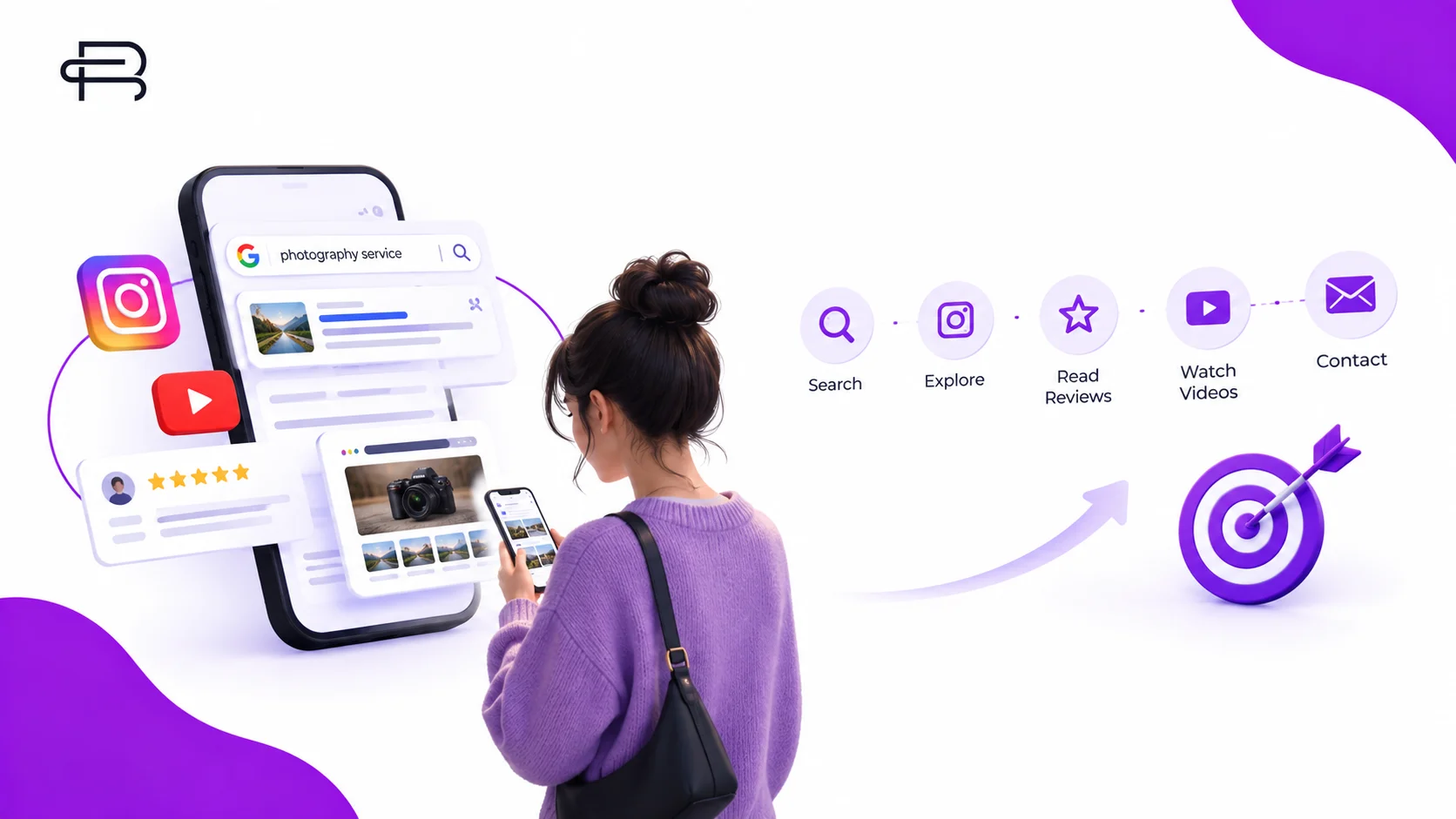
Imagine someone searching for a photographer in their area. Before making a decision, they might:
- Search Google
- Visit different websites
- Check Instagram portfolios
- Read customer reviews
- Compare services
- Watch videos
- Send an enquiry
Every one of these online interactions can become an opportunity for a business to connect with a potential customer.
This is one reason why digital marketing for small businesses has become increasingly useful. Even a small local business can create an online presence and communicate with potential customers without depending entirely on traditional advertising.
A well-planned digital marketing strategy can help businesses:
- Increase online visibility
- Reach relevant audiences
- Build brand awareness
- Generate enquiries and leads
- Communicate with customers
- Promote products and services
- Understand customer behaviour
- Measure marketing performance
The goal is not simply to be present online. The goal is to create a meaningful digital presence that supports business objectives.
How Does Digital Marketing Work?
So, what is digital marketing and how does it work? Digital marketing generally works through a customer journey where a person discovers a business, develops interest, compares available options, and eventually takes action.
A person may first discover a business through a Google search, social media post, advertisement, video, recommendation, or blog article. When people understand what is digital marketing, they can see how these different channels work together to guide potential customers from awareness to action.
If the information is useful and relevant, they may become interested and explore further.
They might then:
- Visit the website
- Follow the social media page
- Read reviews
- Download information
- Send an enquiry
- Subscribe to an email list
- Compare the business with competitors
Eventually, the person may become a customer.
A simple digital marketing journey can be represented as:
Awareness → Interest → Consideration → Conversion → Retention
Different digital marketing techniques can support different stages of this journey. For example, SEO can help with discovery, content can build understanding, social media can create engagement, paid advertising can generate targeted visibility, and email marketing can help maintain communication.
This is one of the key ideas behind what is digital marketing—using different digital channels together to connect with the right audience and support them throughout their journey.
Digital marketing does not necessarily end after a customer makes a purchase. Businesses can continue building relationships through useful content, customer support, email communication, social media, and other digital channels.
What Are the Benefits of Digital Marketing?
 Digital marketing can provide several benefits when it is planned around clear goals. Understanding what is digital marketing also means understanding how these online strategies can help businesses improve visibility, connect with customers, and create opportunities for growth.
Wider Reach
One of the key benefits of digital marketing is its ability to help businesses reach audiences beyond their immediate physical location. Websites, search engines, social media, and other online platforms can connect businesses with people across different locations.
Targeted Communication
Digital platforms can help businesses communicate with specific audience groups based on relevant characteristics, interests, and behaviour. This makes it easier to create messages that are more relevant to potential customers.
Measurable Results
Another important part of what is digital marketing is the ability to measure marketing performance. Many digital marketing activities can be tracked through analytics and platform reporting, helping businesses understand traffic, engagement, leads, and conversions.
Flexible Budgets
Businesses can begin with organic strategies or smaller paid campaigns and adjust their investment as they learn what works. This flexibility can make digital marketing suitable for businesses with different budgets and goals.
Direct Customer Interaction
Websites, social media, email, and messaging platforms create opportunities for direct communication between businesses and customers. Businesses can answer questions, receive feedback, provide support, and build stronger relationships.
Personalization
Digital marketing can allow businesses to create different messages for different audience groups based on their interests, needs, and stage in the customer journey. This can make communication more relevant and meaningful.
Together, these benefits show why what is digital marketing is an important question for modern businesses. With the right strategy, digital marketing can help businesses improve their online presence, connect with the right audience, and create opportunities for sustainable growth.
 Traditional marketing mainly uses offline channels, while digital marketing uses online channels and platforms. Understanding what is digital marketing becomes easier when you compare it with traditional marketing and see how businesses communicate with their audiences through different channels.
What Are Common Digital Marketing Mistakes Beginners Make?
Learning digital marketing for beginners becomes easier when you understand common mistakes.
Trying Every Platform
Being present everywhere can spread your time and resources too thin. Start with platforms that are relevant to your audience.
Focusing Only on Followers
Followers alone do not necessarily represent business success.
Traffic, enquiries, leads, conversions, and customer retention can provide more meaningful information.
Creating Content Without a Purpose
Every piece of content should have a reason.
It might educate, answer a question, build trust, generate awareness, or encourage an action.
Ignoring the Website
Social media can create visibility, but a website can provide a central place where customers can learn about your business and take action.
Expecting Immediate Results
Some digital marketing methods, particularly SEO and content marketing, can take time to build momentum.
Consistency, testing, and continuous improvement are important.
How Can Beginners Start Learning Digital Marketing?
Beginners can start learning digital marketing by understanding the fundamentals and gradually developing practical experience.
You do not need to learn everything at once.
A simple learning path is:
Learn the basics → Choose an area → Practice → Analyze → Improve
Start by understanding the main areas:
- SEO
- Content marketing
- Social media marketing
- Paid advertising
- Email marketing
- Analytics
Then choose one area that interests you and explore it more deeply.
For example, someone who enjoys writing may start with content marketing and SEO. Someone interested in advertising and data may explore paid campaigns and analytics.
Practical experience is equally important.
You can:
- Create a simple website
- Start a blog
- Practice keyword research
- Create social media content
- Analyze website traffic
- Build a sample campaign
- Study successful digital marketing examples
The more you practice, the easier it becomes to understand how different digital marketing techniques work together.
What Is the Future of Digital Marketing?
The future of digital marketing continues to develop as technology and customer behaviour change.
Artificial intelligence, automation, short-form video, personalization, voice-based interactions, conversational experiences, and data-driven marketing are becoming increasingly relevant.
AI can help marketers with tasks such as content ideation, data analysis, automation, and creative workflows. However, technology is only one part of effective marketing.
Understanding people remains important.
Businesses still need to understand:
- Customer needs
- Problems
- Questions
- Expectations
- Search behaviour
- Buying decisions
The future of digital marketing is likely to continue combining technology, creativity, data, strategy, and human understanding.
This creates new opportunities for businesses and professionals who are willing to learn and adapt.
Frequently Asked Questions About Digital Marketing
What Is Digital Marketing in Simple Words?
What is digital marketing? Digital marketing is the process of promoting a business, product, service, or brand through online channels such as search engines, websites, social media, email, and digital advertising.
What Are the Main Types of Digital Marketing?
The main types of digital marketing include SEO, social media marketing, content marketing, paid advertising, email marketing, local SEO, and analytics.
Why Is Digital Marketing Important?
Digital marketing can help businesses reach relevant audiences online, improve visibility, communicate with customers, generate leads, and measure marketing performance. Understanding what is digital marketing can help businesses identify the right channels for their goals.
Is SEO Part of Digital Marketing?
Yes. SEO is one of the major areas of digital marketing. It focuses on improving a website’s visibility for relevant searches and helping businesses reach people who are actively looking for related information, products, or services.
Is Digital Marketing Useful for Small Businesses?
Yes. Small businesses can use digital marketing to improve online visibility, reach potential customers, generate enquiries, promote their services, and build relationships with their audience. Learning what is digital marketing and how it works can help small businesses make better decisions about their online presence.
How Can I Start Learning Digital Marketing?
Start with the fundamentals, understand the main digital marketing channels, choose one area to explore more deeply, and gain practical experience through real or sample projects.
What Is the Difference Between Digital Marketing and Online Marketing?
The terms are often used interchangeably. Both generally refer to promoting products, services, or brands through digital or online channels such as websites, search engines, social media, email, and digital advertising.
What Are the Most Important Digital Marketing Channels?
There is no single channel that is equally suitable for every business. SEO, social media, content marketing, paid advertising, email marketing, local SEO, and analytics can all play different roles depending on the business goal and target audience.
Final Thoughts
So, what is digital marketing? It is much more than posting on social media or running advertisements.
Digital marketing is a broader approach to connecting businesses with people through digital channels. SEO, content marketing, social media marketing, paid advertising, email marketing, local SEO, and analytics can all contribute to a complete marketing strategy.
For beginners, understanding what is digital marketing is a useful first step toward building a strong online presence.
The best way to approach digital marketing is simple:
Understand your audience → Learn the fundamentals → Choose relevant channels → Create useful content → Measure your results → Keep improving.
The digital world continues to create new opportunities for businesses of all sizes. With the right strategy, useful content, consistent effort, and a willingness to learn, digital marketing can become a powerful way to build visibility, connect with customers, and create opportunities for sustainable online growth.