
If you want to reach professionals, decision-makers, business owners, or other companies, advertise on LinkedIn can be a powerful part of your digital marketing strategy. Unlike traditional advertising, LinkedIn allows businesses to focus on specific professional audiences, making it easier to connect with people who are more likely to be interested in their products or services.
Unlike many other social media platforms, LinkedIn is built around professional networking. People come to the platform to discover businesses, build professional relationships, find career opportunities, learn about industries, follow companies, and make important career or business decisions.
This professional environment makes LinkedIn particularly valuable for businesses that want to advertise on LinkedIn and connect with a relevant B2B audience. Companies can use LinkedIn advertising to promote their products, services, events, content, job opportunities, and brand messages to carefully selected professional audiences.
But simply running an advertisement isn’t enough. You need the right audience, message, creative, and strategy.
In this guide, we’ll look at how LinkedIn advertising works, why businesses use it, different LinkedIn ad formats, how to create a campaign, and some practical tips to get better results.
What Does It Mean to Advertise on LinkedIn?
 To advertise on LinkedIn means using LinkedIn’s paid advertising platform to promote your business, products, services, content, or job opportunities to a specific professional audience.
One of the biggest advantages of LinkedIn advertising is the amount of professional information available for audience targeting.
Depending on the campaign and available targeting options, businesses can reach people based on factors such as:
- Job title
- Industry
- Company
- Company size
- Seniority
- Skills
- Professional interests
- Location
- Education and other professional characteristics
For example, imagine you’re offering digital marketing services specifically for small technology companies.
Instead of showing your advertisement to everyone, you can build an audience around relevant professional and company characteristics.
This makes LinkedIn particularly interesting for businesses that sell products or services to other businesses.
Why Should You Advertise on LinkedIn?
There are many social media platforms where businesses can run advertisements. So, why choose LinkedIn?
The answer mainly comes down to professional targeting, business intent, and the ability to connect with a highly relevant professional audience. When you advertise on LinkedIn, you are not simply reaching people based on their general interests. You can build campaigns around professional characteristics such as job roles, industries, company information, seniority, and professional interests.
This makes LinkedIn particularly useful for businesses that want to reach professionals, decision-makers, and other businesses.
1. Reach a Professional Audience
LinkedIn is designed around professional networking. Users include employees, managers, founders, executives, recruiters, freelancers, marketers, sales professionals, consultants, and many other professionals.
If your target audience is primarily professionals, advertise on LinkedIn can be a natural way to promote your business and communicate with a relevant audience.
For example, a company offering digital marketing services may want to reach marketing managers and business owners rather than a general consumer audience. LinkedIn allows the business to build a more professionally focused audience for its advertising campaigns.
This can make your advertising message more relevant because you can create content specifically for the people you want to attract.
2. Powerful B2B Marketing Opportunities
LinkedIn is especially valuable for B2B businesses because companies can use LinkedIn advertising to connect with professionals who may influence or make business purchasing decisions.
For example, a company selling:
-
Marketing software
-
HR solutions
-
Business consulting
-
SaaS products
-
Financial services
-
Professional training
-
IT services
-
Business automation solutions
-
Recruitment services
can use advertise on LinkedIn strategies to reach relevant professionals and organizations.
B2B purchasing decisions often involve research, multiple people, and longer decision-making processes. LinkedIn can support this journey by allowing businesses to promote educational content, case studies, product information, webinars, and lead generation offers.
Instead of trying to make an immediate sale, businesses can use LinkedIn advertising to build awareness first and gradually move potential customers toward a purchase.
3. Reach Decision-Makers
Some products and services require approval from managers, executives, business owners, or department heads before a purchase can happen.
This is another reason businesses choose to advertise on LinkedIn. Professional targeting can help marketers create campaigns designed around specific roles and levels of seniority.
For example, a company offering enterprise software may want to reach IT managers, technology leaders, operations managers, or business executives. A recruitment company may want to reach HR managers and talent acquisition professionals.
Reaching the right decision-makers can be more valuable than simply reaching a large audience. Even if a campaign generates fewer clicks, the people who interact with it may have a greater influence on purchasing decisions.
4. Build Brand Awareness
LinkedIn advertising isn’t only about getting immediate sales. Businesses can also advertise on LinkedIn to introduce their brand to a professional audience and establish credibility within their industry.
For example, a consulting company could promote an educational report, industry research, market insights, or a useful business guide instead of directly asking people to purchase a service.
This type of content can help potential customers become familiar with the company and understand its expertise. Over time, repeated exposure to useful and relevant content can help build trust and brand recognition.
Brand awareness is particularly important for B2B businesses because customers may need several interactions with a company before they are ready to make a purchasing decision.
5. Generate High-Quality Leads
Another major reason to advertise on LinkedIn is lead generation. Businesses can create campaigns designed to encourage interested professionals to submit their information, request more details, download resources, register for events, or contact the business.
For example, a software company could offer a free product demonstration, while a training company could promote a downloadable industry guide.
The goal is not simply to collect as many leads as possible. A successful LinkedIn advertising campaign should focus on attracting qualified leads that match the company’s ideal customer profile.
6. Support the Customer Journey
When you advertise on LinkedIn, you can use different types of content depending on where potential customers are in their buying journey.
At the awareness stage, you might promote educational content or introduce your brand. At the consideration stage, you could promote case studies, webinars, product information, or industry reports. At the decision stage, you could encourage users to request a consultation, book a demonstration, or contact your sales team.
This approach allows LinkedIn advertising to become part of a larger marketing strategy rather than simply being a way to generate individual clicks.
Ultimately, the biggest advantage of choosing to advertise on LinkedIn is the opportunity to combine professional audience targeting with relevant content and clear business objectives. When businesses understand their audience and create campaigns around their needs, LinkedIn can become a valuable channel for brand awareness, lead generation, B2B marketing, and long-term business growth.
Different Types of LinkedIn Ads
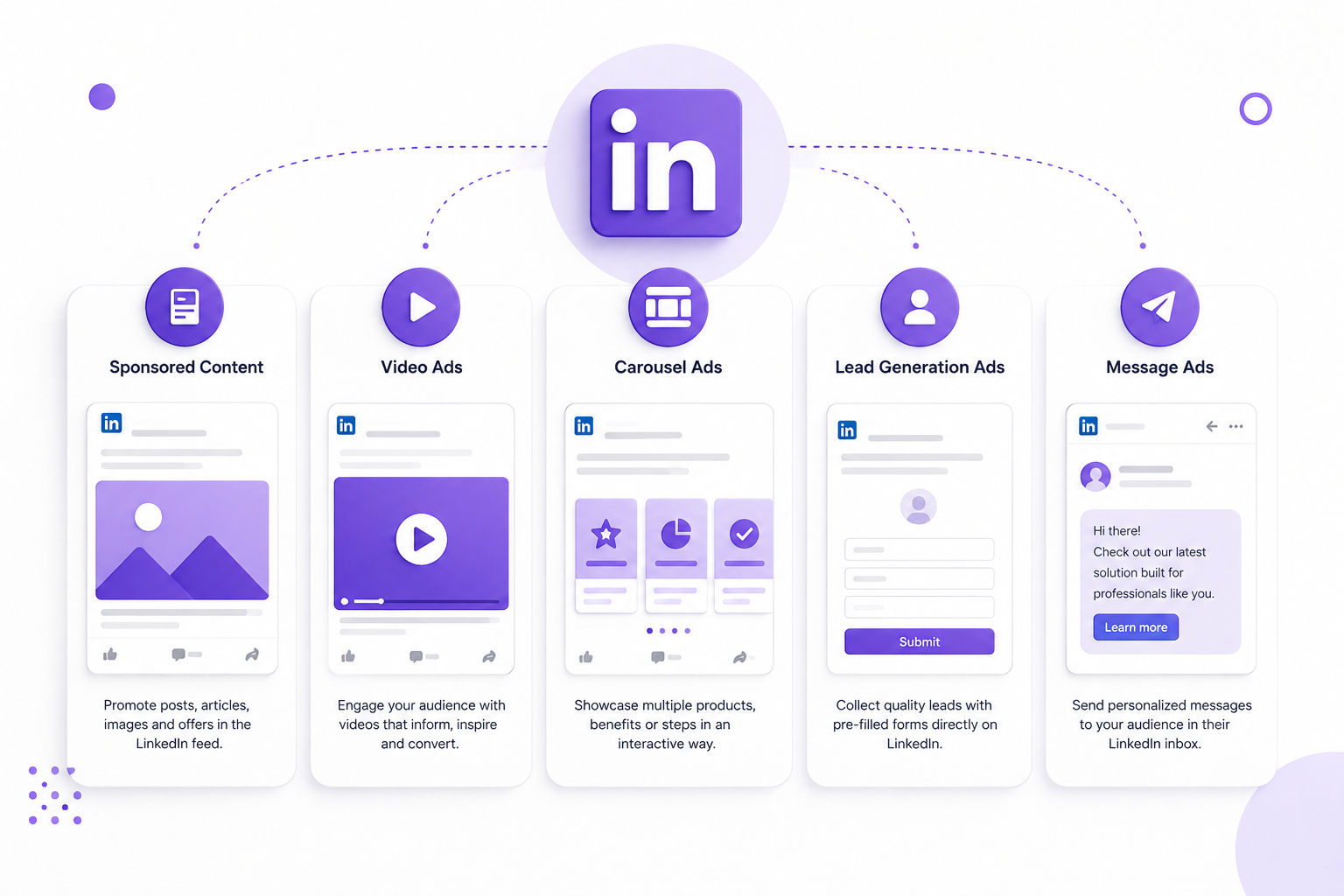
 Before you advertise on LinkedIn, it’s useful to understand the different types of advertising formats available.
Sponsored Content
Sponsored content appears in the LinkedIn feed and can look similar to regular posts.
Businesses can use sponsored content to promote:
- Articles
- Videos
- Images
- Offers
- Product information
- Company announcements
This format works well when you want your advertisement to fit naturally into the user’s feed.
Video Ads
Video can be an excellent way to explain a product or capture attention quickly.
Businesses can use LinkedIn video advertisements for:
- Product demonstrations
- Brand stories
- Customer testimonials
- Educational content
- Event promotions
- Company introductions
For example, instead of explaining your software through a long paragraph, you could create a short video showing how it solves a specific problem.
Carousel Ads
Carousel ads allow businesses to display multiple cards that users can swipe through.
This format can be useful for:
- Explaining multiple benefits
- Showcasing different products
- Presenting a step-by-step process
- Sharing multiple statistics
- Telling a short brand story
For example:
Card 1: The problem
Card 2: Why it happens
Card 3: Your solution
Card 4: How it works
Card 5: Call to action
Lead Generation Ads
If your main goal is collecting leads, LinkedIn’s lead generation options can be useful.
Instead of sending users to a separate website form, LinkedIn can make it easier for users to submit their information.
Businesses can use lead campaigns to collect information from people interested in:
- Product demos
- Free consultations
- Webinars
- E-books
- Courses
- Business services
The key is to offer something valuable enough for the audience to exchange their information.
Message Ads
Some LinkedIn advertising formats can place promotional messages directly into a user’s LinkedIn messaging experience.
These can be useful when you have a specific offer or want to encourage people to take an action.
However, the message needs to feel relevant.
Nobody wants to receive a long sales pitch that has nothing to do with their work.
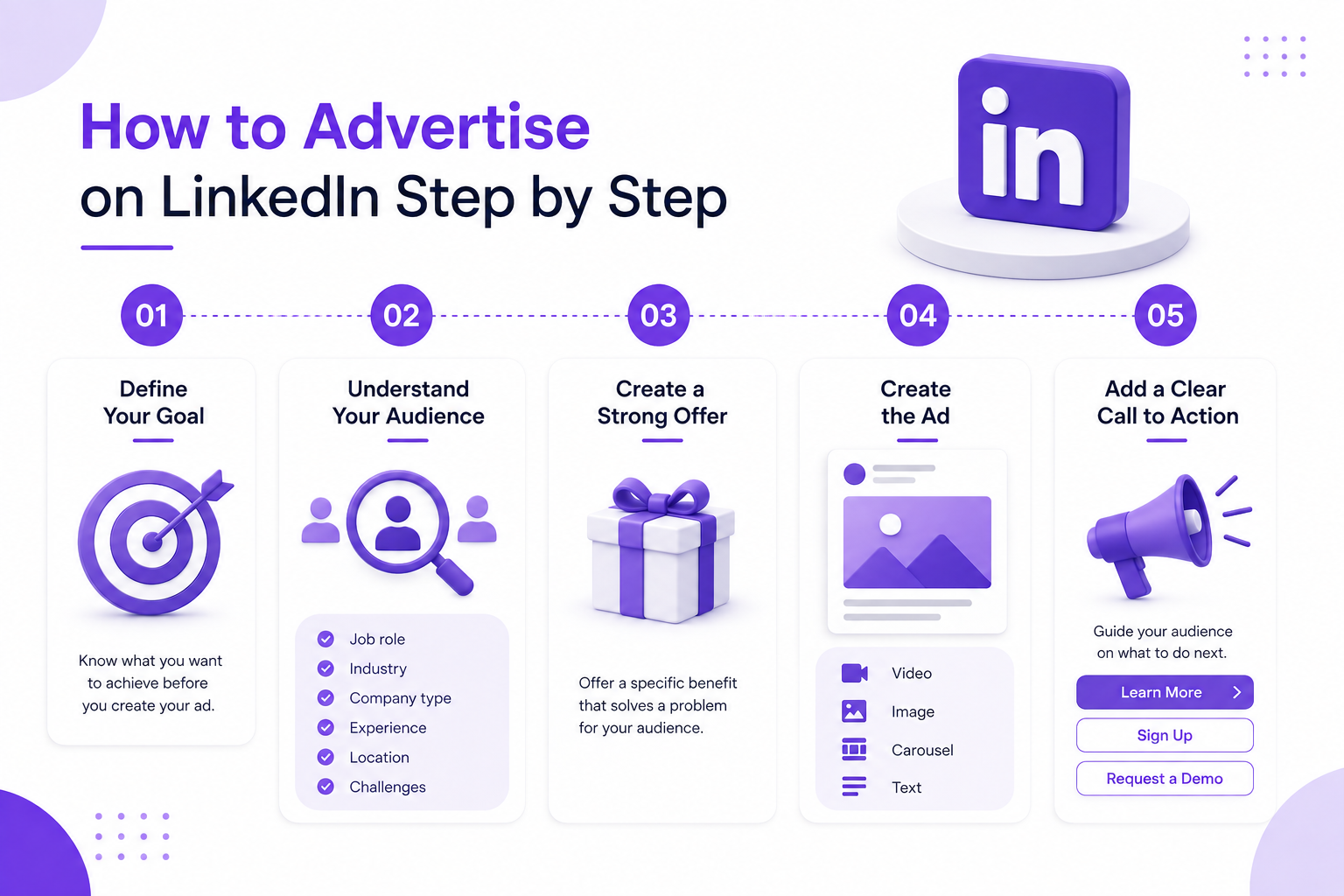
How to Advertise on LinkedIn Step by Step
 Now let’s look at a simple process for creating a LinkedIn advertising campaign.
Step 1: Define Your Goal
Before creating an advertisement, decide what you actually want to achieve.
Your goal could be:
- Brand awareness
- Website visits
- Engagement
- Video views
- Lead generation
- Conversions
- Event registrations
Don’t start with the advertisement.
Start with the objective.
For example:
“I want to generate leads from marketing managers at small and medium-sized businesses.”
That’s much more useful than simply saying:
“I want to advertise my business.”
Step 2: Understand Your Audience
Think about the person you’re trying to reach.
Ask yourself:
Who needs my product or service?
Then consider their:
- Job role
- Industry
- Company type
- Professional experience
- Location
- Business challenges
The clearer your audience is, the easier it becomes to create relevant advertising.
Step 3: Create a Strong Offer
Your advertisement needs to give people a reason to stop scrolling.
Instead of simply saying:
“We provide digital marketing services.”
Try communicating a specific benefit:
“Get a practical digital marketing strategy designed to help your business generate more qualified leads.”
The second message tells the audience what they may actually gain.
Step 4: Create the Ad
Your creative should be simple and easy to understand.
Depending on the campaign, you might use:
- A short video
- A professional image
- A carousel
- A text-based creative
- A lead-generation offer
Don’t overload the advertisement with too much information.
A strong ad usually communicates one main idea clearly.
Step 5: Add a Clear Call to Action
Tell people what you want them to do next.
Examples include:
- Learn More
- Download Now
- Register
- Sign Up
- Get Started
- Request a Demo
- Contact Us
A clear CTA removes confusion and guides the user toward the next step.
How Much Does It Cost to Advertise on LinkedIn?
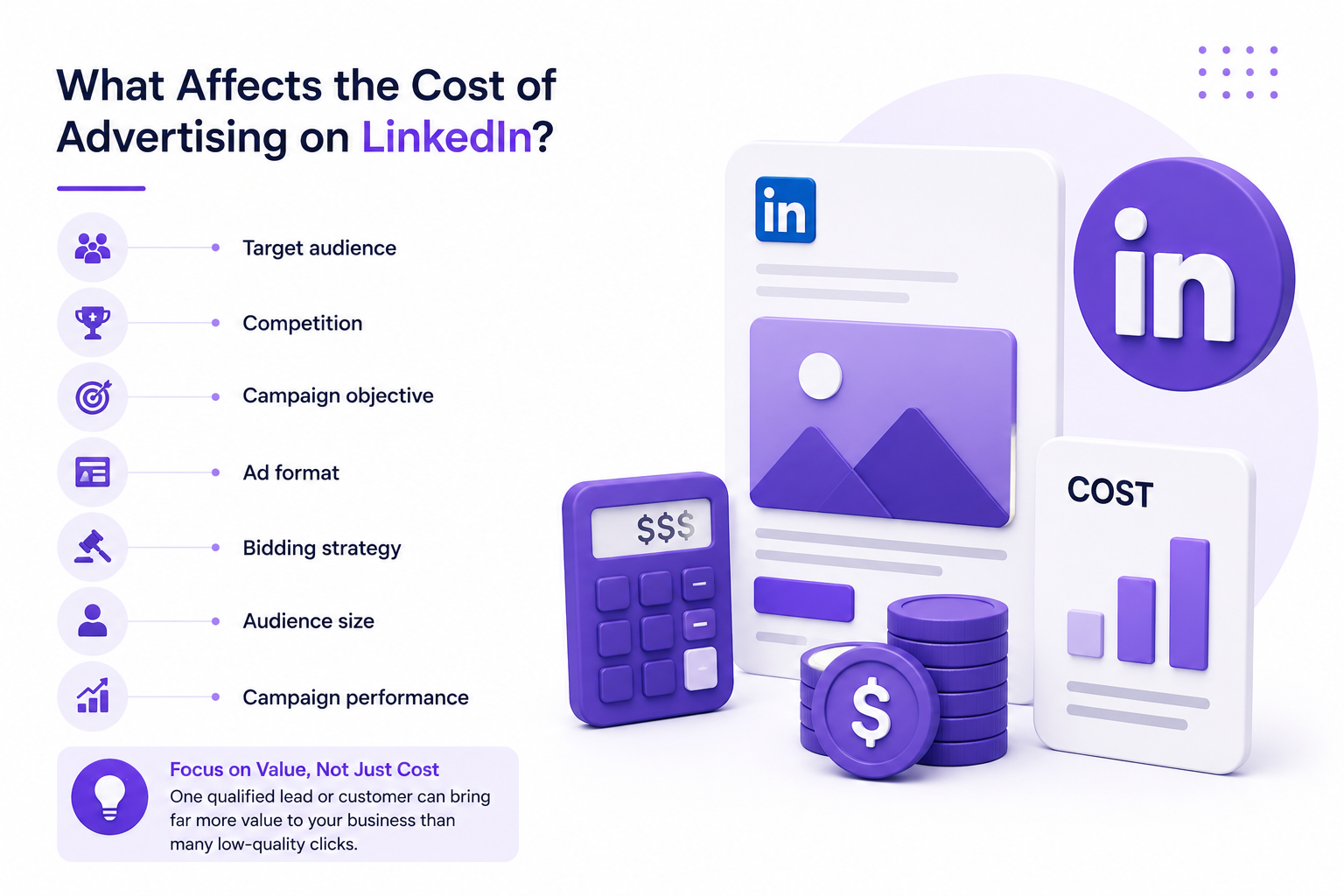
The cost of advertise on LinkedIn isn’t the same for every business, campaign, or target audience. LinkedIn advertising costs can vary depending on several factors, including your campaign goals, audience, competition, ad format, bidding strategy, and overall campaign performance.
Your advertising cost can depend on factors such as:
- Target audience: Reaching senior executives, business owners, or highly specialized professionals can be more competitive than targeting a broader audience.
- Competition: When several businesses are targeting the same professional audience, the cost of reaching that audience can increase.
- Campaign objective: Different objectives, such as website visits, engagement, lead generation, or conversions, can affect how your advertising budget is spent.
- Ad format: Sponsored content, video ads, carousel ads, and lead generation campaigns may perform differently depending on your audience and goals.
- Bidding strategy: Your bid and budget can influence how frequently your advertisements are shown to your selected audience.
- Audience size: A very narrow audience can provide precise targeting, but it may also create more competition for impressions.
- Campaign performance: Ads with strong engagement and relevant messaging can potentially deliver better results than poorly targeted campaigns.
Because LinkedIn is a professional advertising platform with valuable B2B targeting, advertising costs can sometimes be higher than those on other social platforms.
That doesn’t necessarily mean LinkedIn is expensive.
The more important question is:
How much value does each qualified lead or customer generate for your business?
For a B2B company selling a high-value service, one good lead could be worth far more than many low-quality clicks.
Tips to Get Better Results When You Advertise on LinkedIn
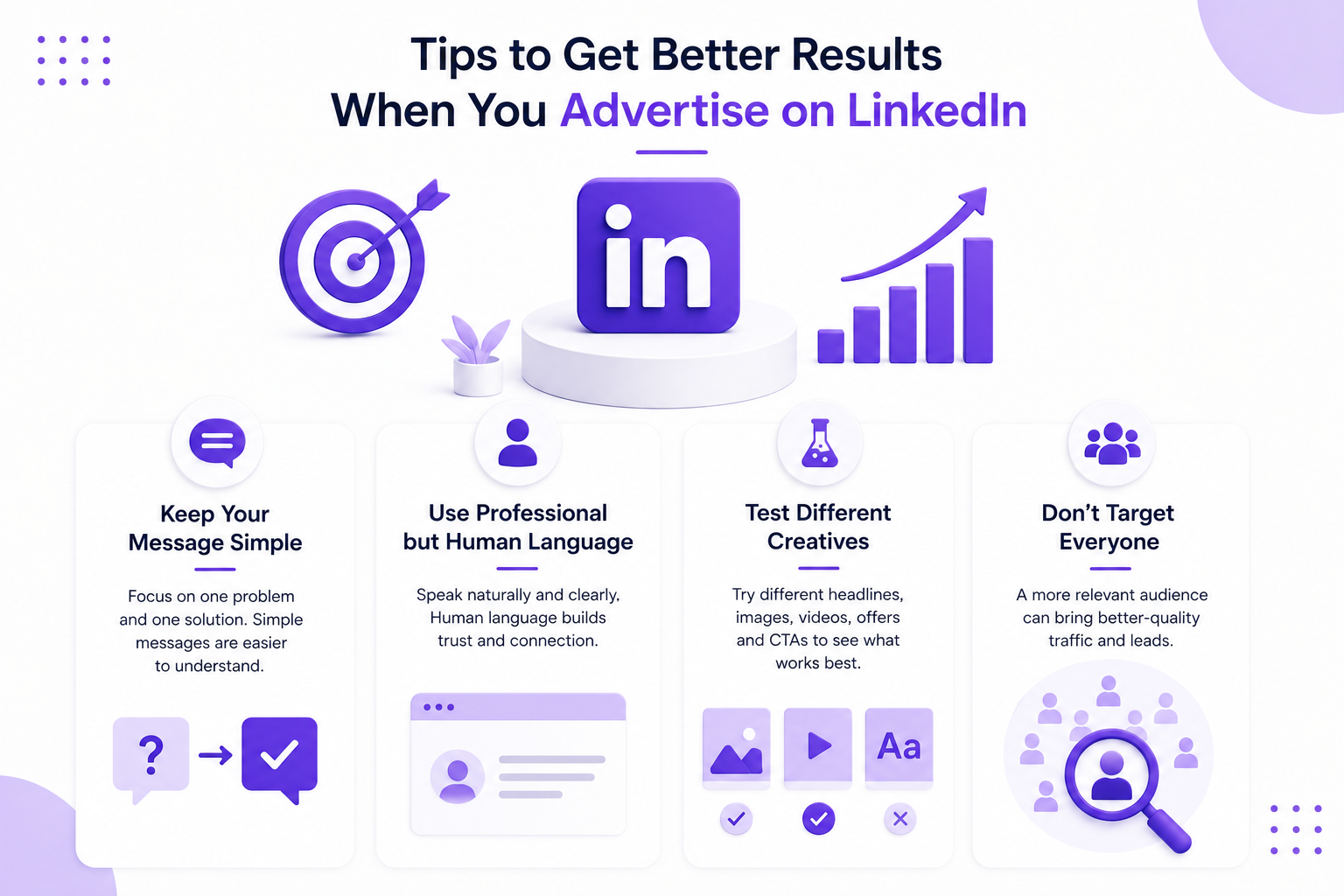
Keep Your Message Simple
Don’t try to explain everything in one advertisement.
Focus on one problem and one solution.
For example:
Problem: Businesses struggle to generate qualified B2B leads.
Solution: A lead-generation strategy designed for their target market.
Simple messages are easier to understand.
Use Professional but Human Language
LinkedIn is a professional platform, but that doesn’t mean your advertisements need to sound robotic.
Instead of:
“Our innovative, industry-leading solution facilitates enhanced business outcomes.”
Say:
“Spend less time searching for leads and more time talking to the right customers.”
The second version sounds more natural and easier to understand.
Test Different Creatives
Don’t assume your first advertisement will be your best one.
Try different:
- Headlines
- Images
- Videos
- Offers
- CTAs
- Messages
Testing helps you understand what your audience responds to.
Don’t Target Everyone
One of the biggest mistakes businesses make is trying to reach an extremely broad audience.
If your product is designed for marketing managers, you don’t necessarily need to advertise to every professional on LinkedIn.
A more relevant audience can often produce better-quality traffic and leads.
Common Mistakes When Advertising on LinkedIn
1. Making the Advertisement Too Sales-Focused
People don’t necessarily want to see “BUY NOW” immediately after discovering your brand.
Try providing value first.
2. Using a Weak Hook
Your first sentence or visual needs to make people interested enough to continue reading or watching.
3. Sending Everyone to the Homepage
If you’re promoting a specific service or offer, consider sending users to a relevant landing page instead of a generic homepage.
4. Ignoring Mobile Users
Many people browse social platforms on mobile devices.
Make sure your creative, text, videos, and landing pages work well on smaller screens.
5. Not Measuring Results
Running an advertisement without checking the results is like driving without looking at the road.
Track the metrics that actually matter to your objective.
Important LinkedIn Advertising Metrics
 Once your campaign is running, you need to understand what’s working.
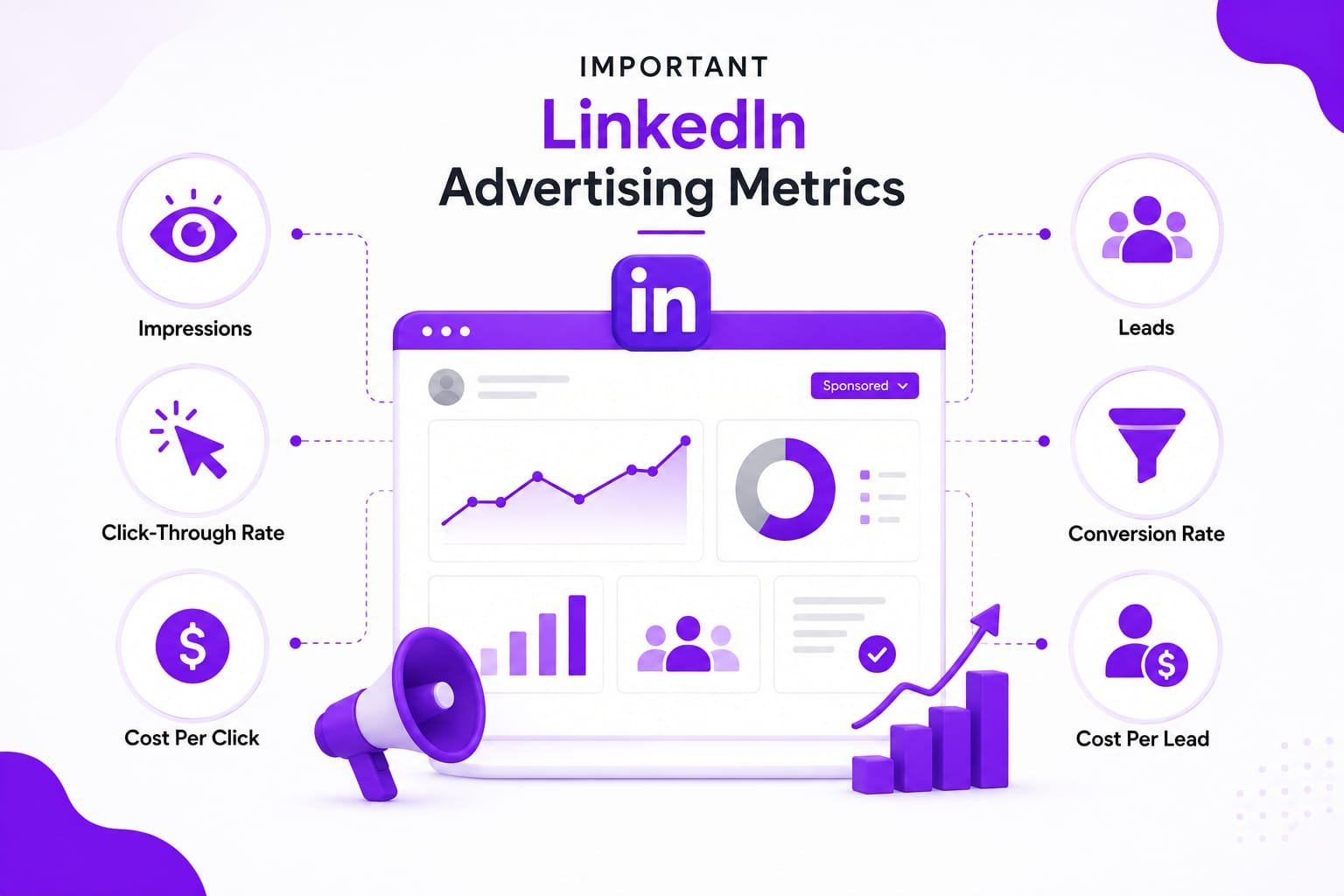
Some useful metrics include:
Impressions
How many times your advertisement was displayed.
Click-Through Rate
Shows how often people clicked after seeing your advertisement.
Cost Per Click
Helps you understand how much you’re paying for clicks.
Leads
Shows how many potential customers submitted their information.
Conversion Rate
Shows how many people completed your desired action.
Cost Per Lead
This is particularly important for lead-generation campaigns because it helps you understand how much you’re spending to acquire each lead.
Is LinkedIn Advertising Right for Your Business?
Not every business needs to advertise on LinkedIn. However, choosing to advertise on LinkedIn can be particularly useful for businesses that want to reach a professional and highly targeted audience.
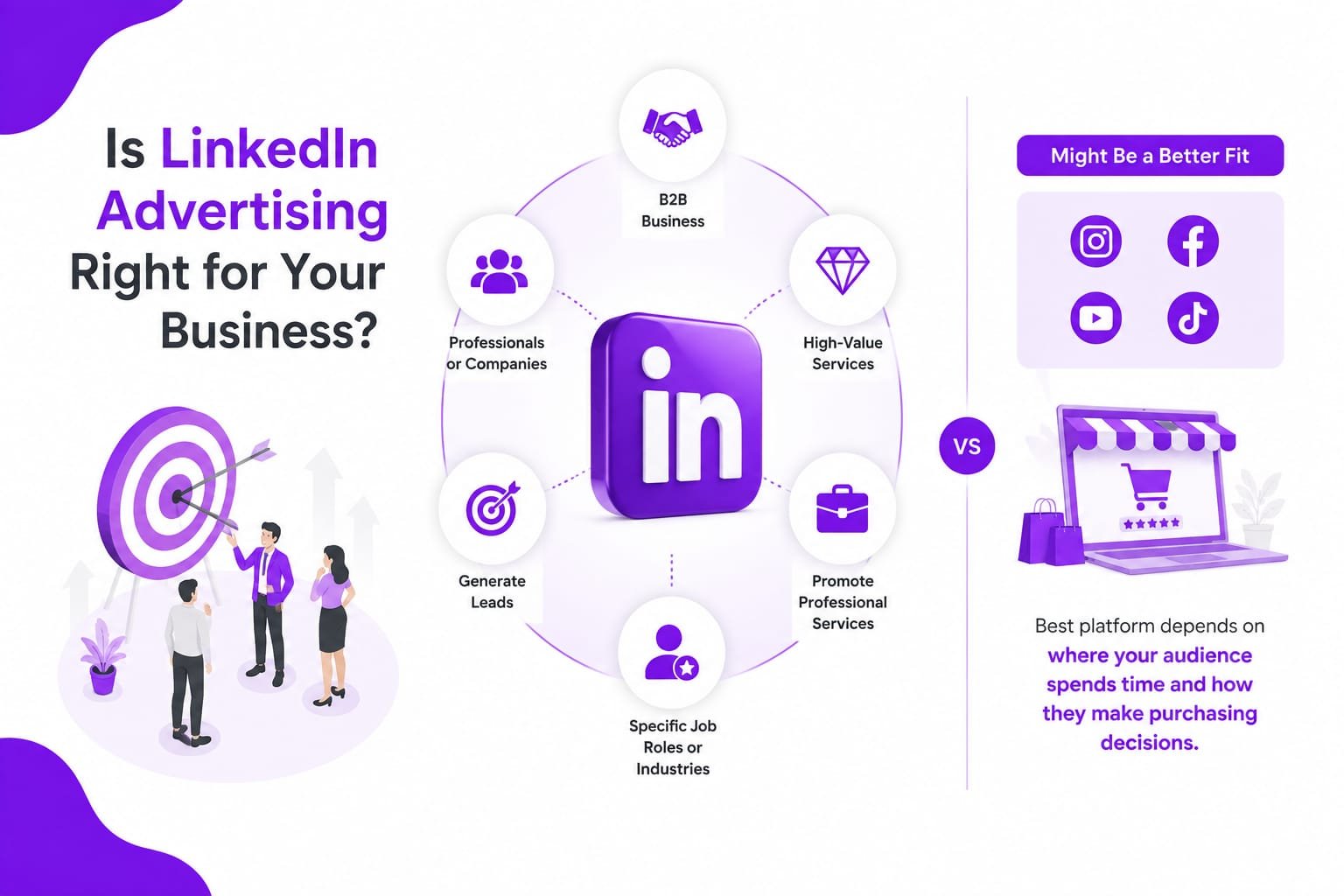
It can be particularly useful if:
-
You operate a B2B business and want to advertise on LinkedIn to decision-makers.
-
Your customers are professionals or companies.
-
You’re selling high-value products or services.
-
You want to generate business leads through LinkedIn advertising.
-
You’re promoting professional services.
-
You want to reach specific job roles, industries, or company types.
-
You want to advertise on LinkedIn to build brand awareness among a professional audience.
For businesses that mainly target consumers, platforms such as Instagram, Facebook, YouTube, or TikTok may sometimes be a better fit. However, for B2B companies, professional service providers, recruiters, SaaS businesses, and companies targeting specific decision-makers, advertise on LinkedIn can be an effective marketing strategy.
The best platform depends on where your audience spends time and how they make purchasing decisions. Before you decide to advertise on LinkedIn, consider your target audience, marketing goals, budget, and the type of customers you want to attract.
The Future of LinkedIn Advertising
As digital marketing continues to evolve, businesses are becoming more focused on reaching the right people rather than simply reaching a large number of people. This is why advertise on LinkedIn is becoming an increasingly valuable strategy for businesses that want to connect with professionals, decision-makers, and potential customers.
LinkedIn’s professional environment makes it especially interesting for B2B marketers. When businesses advertise on LinkedIn, they can reach audiences based on factors such as job title, industry, company size, skills, and professional interests.
The future of LinkedIn advertising is likely to focus even more on personalization, valuable content, video advertising, lead generation, and highly targeted campaigns. Businesses can combine these strategies with strong landing pages to create a complete marketing journey.
For example, a company can advertise on LinkedIn to introduce its brand to a specific professional audience, provide useful content to build trust, and then use lead generation campaigns to turn interested users into potential customers.
The goal isn’t simply to get someone to click an advertisement. Effective advertise on LinkedIn strategies focus on creating meaningful interactions and building long-term relationships with potential customers.
As LinkedIn advertising continues to develop, businesses that understand their audience, create valuable content, and use precise targeting will be better positioned to generate quality leads and achieve sustainable growth.
Conclusion
To advertise on LinkedIn successfully, you need more than a good-looking advertisement. A successful advertise on LinkedIn strategy starts with understanding your target audience and identifying the professionals or decision-makers you want to reach. You also need to choose the right campaign objective, create a relevant offer, write clear and engaging ad copy, and use accurate audience targeting.
When you advertise on LinkedIn, continuously monitoring campaign performance is equally important. Testing different ad formats, headlines, visuals, audiences, and calls to action can help you understand what works best and improve your results over time.
LinkedIn can be a powerful platform for businesses that want to advertise on LinkedIn to reach professionals, build brand awareness, generate high-quality leads, and create valuable B2B opportunities. With the right strategy, businesses can turn LinkedIn advertising from a simple promotional activity into a long-term lead generation and growth channel.